




- Comments (0)
The squeeze is one of the most powerful preflop moves in poker, yet many players use it far less often than they should. Understanding when to squeeze in poker allows you to take control of the table, attack weak ranges and build pots that favour strong hands. If you want to add depth to your poker strategy, learning how and when to apply the squeeze play is essential.
What Is a Squeeze?
Many players ask what is a squeeze, and why it works so effectively.
A squeeze play happens when one or more players call an open raise, and then you re-raise from behind. Because the caller usually has a capped range, and the original raiser may not have a premium hand, this creates a situation where you are attacking two weaker ranges at once.
A squeeze works because:
- The original raiser often cannot continue with a wide range
- The caller rarely defends versus large re-raises
- The size of the pot is already inflated
- You will represent stronger hands than you actually hold
This makes a squeeze play an efficient way to make profit, especially in no limit hold'em.
The Squeeze Play as Core Poker Strategy
To understand the squeeze play deeply, you need to think about your opponents and the structure of the preflop action. A good squeeze play forces both the raiser and the caller to fold many hands, especially out of position.
Effective squeezing requires balancing:
- Your squeezing range
- Fold equity
- The size of the pot
- Table position
- Stack depth
- Tendencies of your opponents
If you want to build an aggressive identity in poker, squeeze plays should become a regular part of your game.
When to Squeeze in Poker: The Three Best Spots
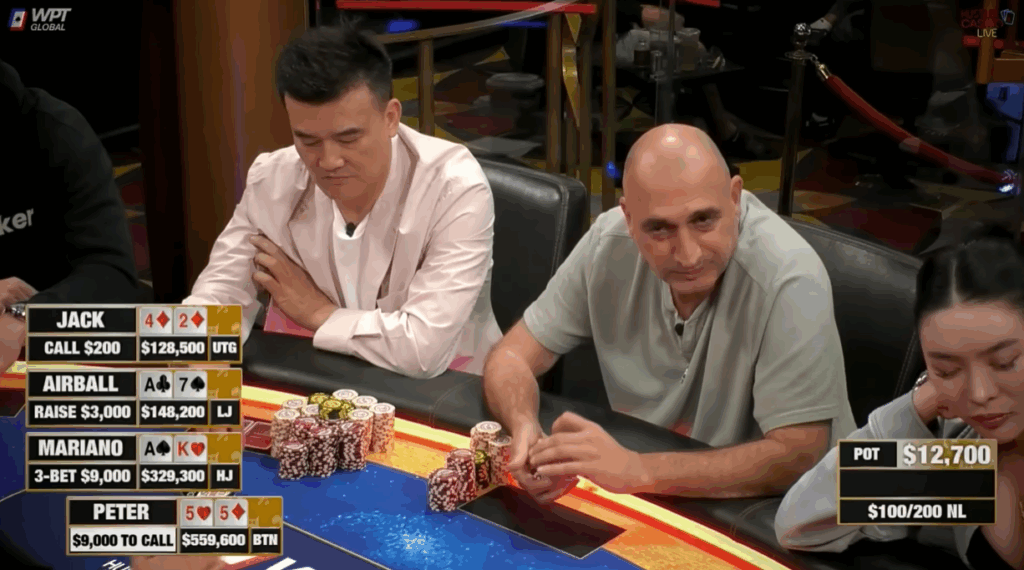
Below are the most reliable situations for a profitable squeeze play.
1. When the original raiser opens a wide range
If the original raiser is opening far too many hands from a position that should be tight, you can squeeze them profitably.
For example, UTG is supposed to open a tight range. So if you notice this UTG player has been:
- entering too many pots
- raising hands they normally should not have
- constantly opening regardless of position
Then this player is very likely playing a wider range than they should.
Why this matters:
When a loose raiser opens and a caller joins behind, both players become extremely uncomfortable facing a large re-raise.
- The wide opener is forced to fold many weak hands they should not have opened.
- The caller rarely has strong enough holdings to continue.
This creates the perfect squeeze scenario. The raiser is too wide, the caller is too weak, and you pick up a bloated pot uncontested.
2. When the Caller Is Capped
A caller is capped when their line of play cannot contain premium hands.
This often happens when the caller is in late position.
These callers usually have hands like:
- suited connectors
- small or medium pairs
- suited broadways
- speculative hands they didn’t 3-bet
When a caller only calls instead of 3-betting, they remove hands like QQ+, AK from their range, making them capped.
Why this is great for squeezing:
- Capped callers fold to large squeezes extremely often.
- Their hands perform terribly against your strong re-raise size.
- They almost never trap with premiums.
As a result, you win a large percentage of these pots immediately, and even if they defend your raise, you have:
- Good equity against your opponents calling ranges
- In position
- Betting initiative
3. When You Are In Position Post-Flop
Why being in position post-flop makes squeezing stronger:
- You will act last on the flop.
- You control the size of the pot.
- You can continuation bet more effectively.
- You apply maximum pressure to two or more players who already committed money to the pot (one loose opener + capped callers).
“Take time to deliberate, but when the time for action comes, stop thinking and go in.”

Napoleon Bonaparte
Optimal Positions for a Squeeze Play
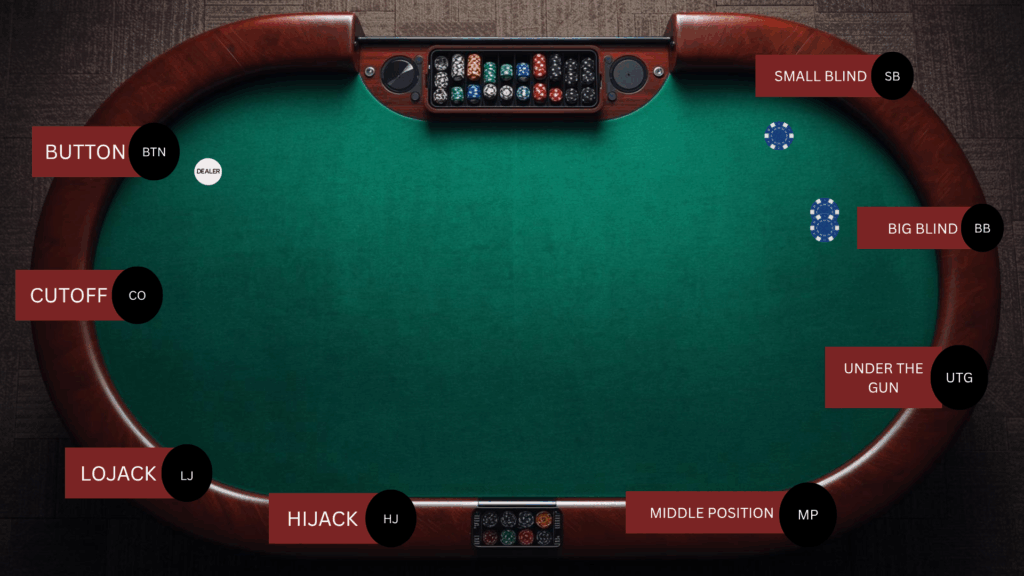
Squeezing on the Button
Being on the button is ideal because you are closing the action and can select hands confidently. You profit both from fold equity and positional advantage in the later streets.
Squeezing in the Small Blind
Squeezing in the small blind is more complex because you are out of position on the flop.
You must choose hands carefully and adjust the size of the re-raise.
Larger sizing forces folds, compensating for being out of position.
Squeezing From the Blinds
When the open comes from the cutoff or button, you can use a wide squeezing range from either blind, especially if the caller is loose.
Choosing Your Squeezing Range
A strong squeezing range depends on the table dynamics, but a good baseline is:
Premium Value hands
When a raise and one or more calls happen before you act, your strong value hands (AA, KK, QQ, JJ, AK) automatically become part of your squeezing range.
You should be 3-betting a majority of these premium hands anyway, even if it's not a squeeze play.
Semi-bluff hands
These include hands like A5 suited, KQs, QJs or suited connectors. They play well in position, block top premiums and fold out weaker hands.
Exploitative hands
If you are facing a loose raiser and a passive caller, you can widen your squeeze frequencies because both opponents fold too often.
The Size of the Squeeze

Understanding the size of the re-raise is critical.
A general rule in the majority of the spots is:
- On the button: 3x the size of the raise plus 1x per caller
- In the small blind: 4x or more, because you are out of position
- Versus very loose ranges: increase the sizing further
The goal is to make calling unattractive while keeping your range balanced.
How To Play Your Squeeze Range on the Flop

Once your squeeze gets called, the pot becomes large relative to stack sizes and the remaining ranges become very defined. Understanding how to play this spot is key to making squeeze plays profitable.
1. When You See the Flop In Position
Being in position after a squeeze is one of the biggest edges you can have.
You will:
- control the size of the pot
- see how the opponent reacts before you act
- continuation bet more effectively
In position, you can c-bet frequently on boards that favour your 3-bet range, such as high-card boards (A-xx, K-xx, Q-xx).
These boards miss the caller's capped range and hit your squeezing range very well.
When the board clearly favours the caller (low connected boards such as 6-5-4 or 9-8-7), you can check back more often and take a pot-control line.
2. When You Are Out of Position
Being out of position after squeezing is much harder.
This is why your preflop squeezing range must be tighter when you expect to be OOP.
When the flop comes:
- use larger c-bet sizes on dry, high-card boards
- check more often on coordinated boards
- avoid barreling blindly because callers in squeeze pots rarely have garbage; they defended for a reason
You simplify the entire decision tree by starting with a stronger range preflop.
3. Playing Value Hands vs Missed Flops
With strong value hands like QQ+ or AK, you can usually continue betting on most boards.
Your opponent’s capped calling range contains many hands like:
- medium pairs
- suited broadways
- suited connectors
These hands struggle against your perceived range.
Even if you miss the flop with AK, you can apply pressure because the caller’s range misses many top-pair boards.
4. When To Slow Down
After a squeeze, the stack-to-pot ratio becomes low.
This means committing your stack becomes easier.
If you completely miss a wet board (T-9-8, 7-6-5), slow down because these boards hit the caller’s range much more often. Barreling would often mean committing your stack to a board you missed.
5. Multiway Squeeze Pots
If two callers see the flop, reduce your bluffing frequency dramatically.
Multiway pots favour tighter play and strong value hands.
When You Should Avoid a Squeeze Play
Even though the squeeze play is powerful, you should avoid it when:
- The raiser has a very tight opening range
- The caller is a trap-heavy player
- Stack sizes are shallow
- You expect to be called frequently
- You lack fold equity
If you are unsure, tightening your range prevents costly mistakes.
Final Thoughts: When to Squeeze in Poker
Knowing when to squeeze in different spots in poker separates strong regulars from passive players.
If you want to pressure weaker ranges, build pots with premium hands, and improve your overall poker strategy, learning to use the squeeze play correctly is essential.
With practice, you will understand how to make profitable re-raises and adjust your squeezing range based on the situation, position and opponents.